
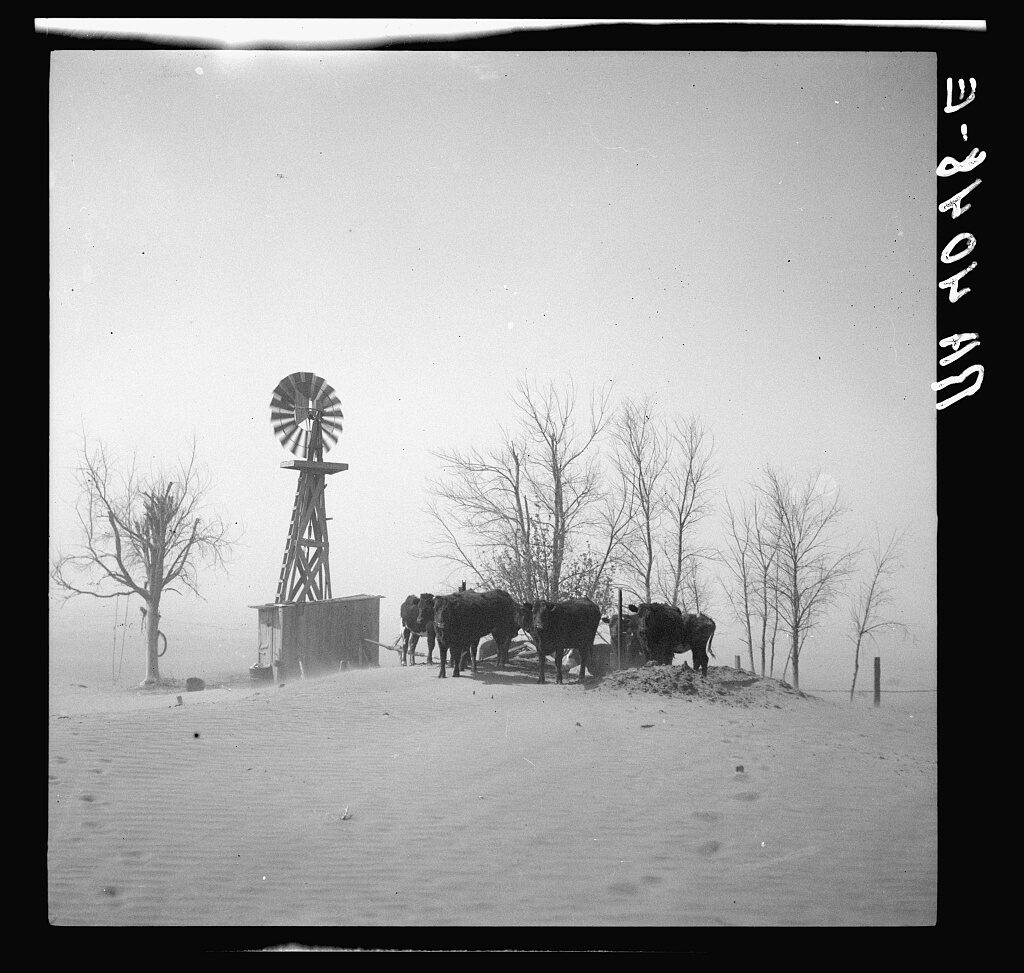
John Steinbeck’s The Grapes of Wrath was first published on March 14,1939. The story of the Joad family—migrants who left the Dust Bowl to find work on the farms of California—was a critical and commercial success, selling nearly half a million copies during its first year of publication.
John Steinbeck’s works reflect the issues and ills of the time period in which he lived. The Grapes of Wrath, for example, deals with a group of migrant farm workers who moved from field to field. Often, these workers lived in squalid conditions and were paid poor wages. They were forced to purchase their supplies from a company store and then work to pay off their debt, many times without ever seeing a penny of their wages.
As background, present students with information about the Dust Bowl and the flight of many farm workers west to California.
Ask students, “If Steinbeck were to write today about the ills of society, what topics or subjects might he find to address?” Brainstorm with the class a list of possible topics. Have groups of students each research a topic of their choosing and prepare an annotated bibliography of fiction and nonfiction texts that address the topic. The bibliographies can later be used as a school library resource.
In this lesson plan, The Grapes of Wrath serves as a backdrop. Students conduct research on issues that the novel addresses, publishing their findings in a multigenre museum exhibit.
Using photographs and other primary sources from the Dust Bowl, dig into these teaching ideas from the Library of Congress. Looking to go deeper? View this unit on Dust Bowl History.
These investigations help students better understand history as well as the the plot of The Grapes of Wrath.
Curious about the NCTE and Library of Congress connection? Through a grant announced by NCTE Executive Director Emily Kirkpatrick, NCTE is engaged in ongoing work with the Library of Congress, and “will connect the ELA community with the Library of Congress to expand the use of primary sources in teaching.” Stay tuned for more throughout the year!
It is the policy of NCTE in all publications, including the Literacy & NCTE blog, to provide a forum for the open discussion of ideas concerning the content and the teaching of English and the language arts. Publicity accorded to any particular point of view does not imply endorsement by the Executive Committee, the Board of Directors, the staff, or the membership at large, except in announcements of policy, where such endorsement is clearly specified.