
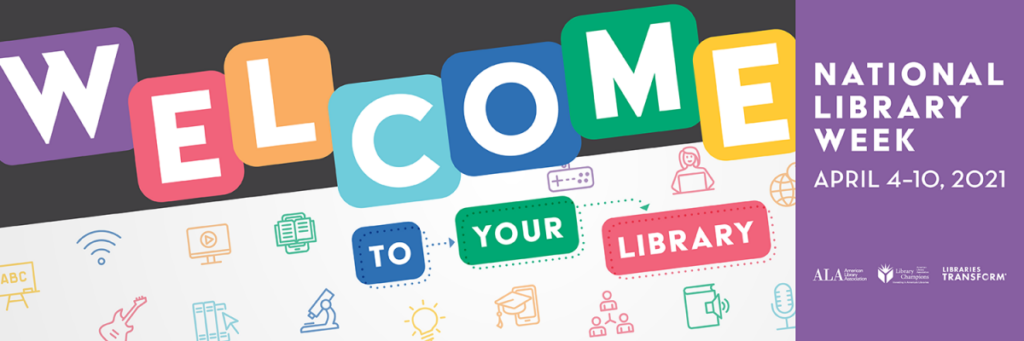
National Library Week begins today and spans April 4–10, 2021. The theme for National Library Week 2021 is “Welcome to Your Library” and promotes the idea that libraries extend far beyond the four walls of a building—and that everyone is welcome to use their services.
During the pandemic, libraries have been going above and beyond to adapt to the changing world by expanding their resources and continuing to meet the needs of their users. Whether patrons visit in person or virtually, libraries offer opportunities for everyone to explore new worlds and become their best selves through access to technology, multimedia content, and educational programs.
How can you celebrate National Library Week?
- Use the library’s online resources: The online services that libraries have made readily available allow users to continue supporting libraries.
- Support your local library on social media: If you can’t make it to your library, visit their website or social media pages to learn about programs and services offered.
- Reread your favorite books: Inventory the books you have access to and reread a beloved text. If you’ve got so many you can’t keep track, consider an app that lets you keep track and share your favorite reads, like Goodreads, LibraryThing, or Litsy.
- Running out of space in your home bookshelves? Use your library as a resource for browsing and sampling new books before you commit to adding them to your personal library.
How do you plan to celebrate National Library Week?
It is the policy of NCTE in all publications, including the Literacy & NCTE blog, to provide a forum for the open discussion of ideas concerning the content and the teaching of English and the language arts. Publicity accorded to any particular point of view does not imply endorsement by the Executive Committee, the Board of Directors, the staff, or the membership at large, except in announcements of policy, where such endorsement is clearly specified.