Search
Career Center
Blog
Shop
Donate
My Account
Facebook
Twitter
Instagram
LinkedIn
bsky
Search
Career Center
Blog
Shop
Donate
My Account
Membership
Events
Resources
Research
Groups
About
Get Involved
Renew!
Join!
Facebook
Twitter
Instagram
LinkedIn
bsky
Literacies as Freedom Tickets - National Council of Teachers of English
Literacies as Freedom Tickets - National Council of Teachers of English
National Council of Teachers of English
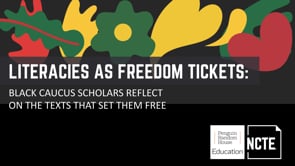
Literacies as Freedom Tickets
Categories
#tomyteacher
Annotation - Summer Sandbox
Author Talks
Book Club
Build Your Stack
CCCC Webinar Series
CEL Convention
College Level Events
Leadership & Advocacy Summit
Library of Congress
Member Gathering
Middle Level Event
Mindful Writing
National Day on Writing
NCTE Convention
NCTE Reads
PD Investigation
Professional Learning
Read Write Code
Recent Event
Secondary Level Events
Series Events
Summer Sandbox
Teacher Appreciation Week
test video
This Story Matters
TYCA Webinar Series
video test
WBRA
Categories
#tomyteacher
Annotation - Summer Sandbox
Author Talks
Book Club
Build Your Stack
CCCC Webinar Series
CEL Convention
College Level Events
Leadership & Advocacy Summit
Library of Congress
Member Gathering
Middle Level Event
Mindful Writing
National Day on Writing
NCTE Convention
NCTE Reads
PD Investigation
Professional Learning
Read Write Code
Recent Event
Secondary Level Events
Series Events
Summer Sandbox
Teacher Appreciation Week
test video
This Story Matters
TYCA Webinar Series
video test
WBRA
Access to this resource is only available to members. Log in or join to gain access.
Login
Become a Member
Back to video library
Related Videos
Homecoming Member Gathering
...
Mindful Writing Series: Interbeing September 26, 2022
...
Leadership & Advocacy Summit: Ernest Morrell
...