Welcome to the NCTE event calendar! Here, you can find a list of events, including webinars, workshops, and in-person conferences. These events provide opportunities for English language arts teachers to learn new strategies and techniques, network with colleagues, and stay up-to-date on the latest research and best practices in the field.
If you have an event that you would like to submit to be included on the NCTE event calendar, please fill out the event submission form. To be considered, events must align with the mission of NCTE and be of professional interest to English language arts teachers. We hope to see you at one of our upcoming events!
If you’re hosting an event you’d like to share, submit your event here.

- This event has passed.
9th Annual ACT-SO Poetry Read-In
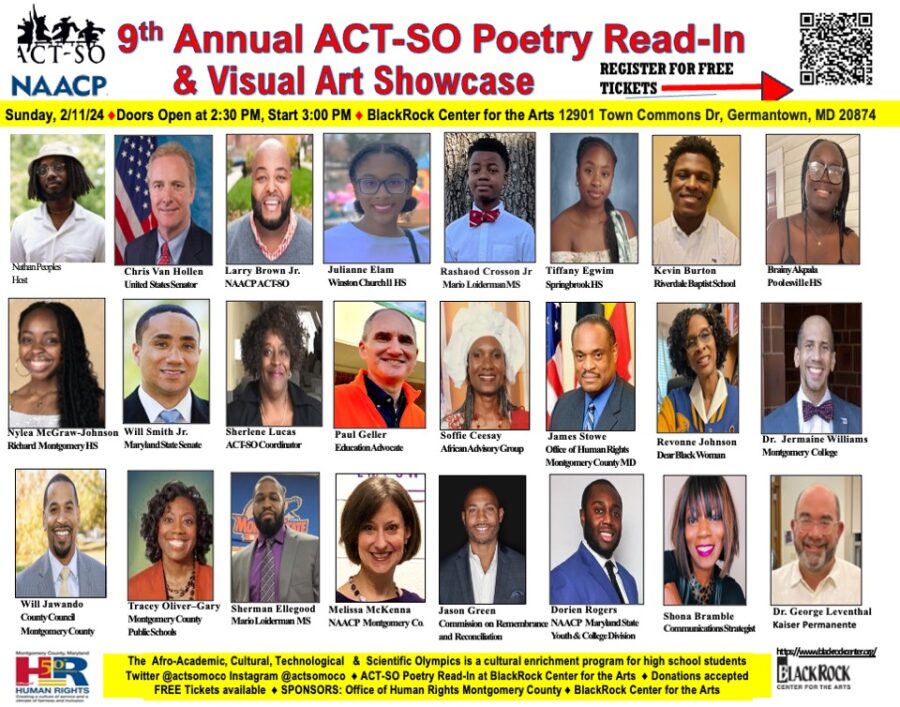
Students read original poetry and community members read poems written by black poets. Doors open at 2:40 PM, Event begins at 3:00 PM Eastern Time. Hosted by ACT-SO of NAACP Montgomery County MD at BlackRock Center for the Arts, 12901 Town Commons Dr, Germantown, MD 20874. Sponsors Montgomery County MD Office of Human Rights and BlackRock Center for the Arts